

Humanitarian Notes from the Sukabumi Intervention Area
That morning, the FCSDS Sukabumi team car stopped on a steep incline in Bantargadung District. It rained heavily. The engine roared, the wheels spun, but the car wouldn't start. They were stuck on the road for two hours. Finally, local residents intervened. Cars are pushed together, slowly, over roads that look more like moving dirt than healthcare access.
It is in areas like this that tuberculosis (TB) screening efforts are carried out.
For people in the villages of Bojonggaling, Mangunjaya, or Buanajaya, health services are not a matter of fifteen minutes away. There is no public transportation. There is a "dogong" like a pickup truck that takes residents to the main road at a cost of 30-50 thousand per way.
The terrain is steep, the electricity is not always stable, the telephone signal is often lost. However, when the screening service approached, people still came and were enthusiastic.
Enthusiasm Beyond Invitation
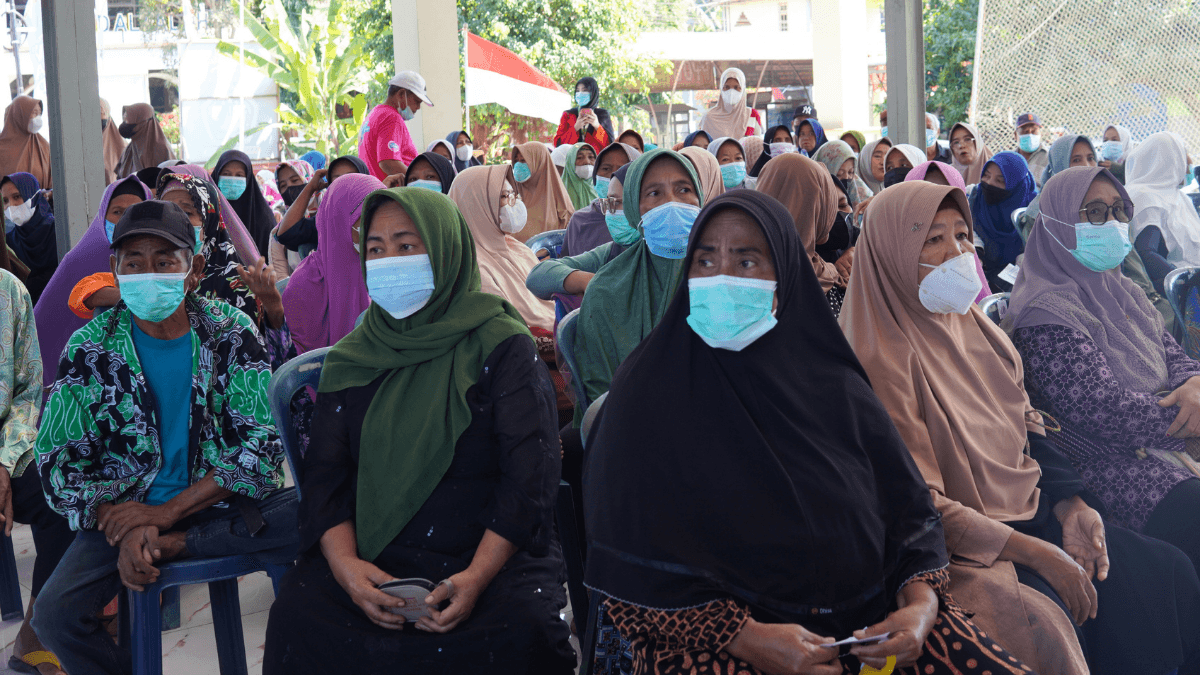
In Cicurug Village, only 66 people were invited based on the results of the Contact Investigation (IK) andCommunity Outreach(CO). However, more than 100 people attended.
Some came without an invitation. There are toddlers, adults and the elderly. There are those who are willing to wait from afternoon until night in Boyongsari Village. Even when the tuberculin (Mantoux test) runs out and some have to be asked to go home, they still hope to be examined. However, of course the team will still try their best for residents who volunteer to come.
Initially the team thought this enthusiasm was rooted in the PMT (Additional Food Provision) which is usually given at posyandu, such as green bean porridge. But apparently not. Not even at all.
Many still come even though they don't get PMT. They come because the examination is free, there are doctors for consultation, there are X-rays, and most importantly the service is closer than usual to their homes.
Elderly People Who Force to Come
In the middle of the screening, an elderly person came in with a hunched body. The distance from his house is about 20 kilometers. There was no ambulance to pick me up. In general, people there have vehicles, but the economic conditions are different. He insisted on coming alone.
What was most surprising was that he asked for fare to return home to the team.
There is no special budget item for sudden needs like that. Everything must have a note. But in the field, humanity often trumps procedures.
"I'm responsible for the costs," answered Kang Iman as District Technical Officer (DTO).
"Why does it have to be Kang Iman? Why not someone else?" when the other team asked.
"Just be human, do good because there is no kindness that goes unrequited," he said.
The cadres experienced something similar. Some have to spend up to IDR 300 thousand for round-trip fares. Some even go into debt to ensure residents receive screening invitations. They continue to work, even though they know that transportation costs are often greater than the incentives they receive. Because for them, this is not just a job.
Heavy Terrain, Data Must Not Be Hole
On the other side of the table, Agus, data entry, faces different challenges. In one day you can input 200 to 300 participant data. Without additional laptop support and internet that is often unstable.
One village had problems because some measurements were incomplete, so the team had to estimate the exact numbers. But afterbriefing, everyone is committed to not having any gaps in the data. Because one empty number could mean one person was missed.
Teams That Don't Just Come and Go
Team solidarity is key. Evendrivershelped count the forms until the evening.
Mas Atmam, 25 years old, doesn't just drive the car and wait. He helped from morning until the screening was finished.
"Just from the heart," he said. "Poor friends if you come home too late."
He hopes this project will be long. Even more solid. More people can be reached.
In several locations, Babinsa, cadres and village officials were also involved. Posyandu was chosen because it was close to the village hall. Communication with regional officials is going well. There was even media that suddenly came and covered it, uniting perceptions between the government, community health centers and field teams. Collaboration builds not in large meetings, but in muddy fields and simple screening rooms.
The Disappearing Elderly and the Wrong Way
In Bumi Sari Village, many elderly people are targeted, including those who have had strokes and are unable to stand for long. They were picked up for inspection. The weather is not friendly. The roads are narrow and vulnerable.
One day, the team got lost. Relying on the digital map, the car entered the oil palm plantation, the road became narrower, ravines on either side. Until finally stuck on a small bridge that cars couldn't pass.
They turned around. On the way, we met a grandmother walking alone towards the posyandu where the team was carrying out TB screening. Because of one goal, they offered a lift. The grandmother got into the car, silent throughout the journey. Arriving at the location, he got off... and soon was no longer visible.
Where did He go?
The area has many old cemeteries. The story makes for light conversation at the end of a long day. Maybe a coincidence. Maybe it's just the field story that will always be remembered.
However, one thing is certain: the elderly there still come in droves when the service is available.
Behind the Numbers, There is a Journey
Indeed, each region has its own story.
There were 174 people who attended TB screening out of 200 targets. There were only 78 out of 200. But there were also 132 who came in the rain. There were even more than 100 people who attended out of the target of 66.
It's not just an achievement. It was a journey through steep roads, electricity outages, data that had to be complete, cadres who owed fares, drivers who worked from the heart, and elderly people who insisted on coming even though they had no money.
In areas such as Caringin, Bantargadung, Cicurug, and Bumi Sari, TB screening is not just a program activity. It is a meeting between the health system and humanity.
And often, what makes it work isn't just the X-ray device or the screening form. But it's the people who choose to keep coming, keep helping, and keep caring even when things get messy.